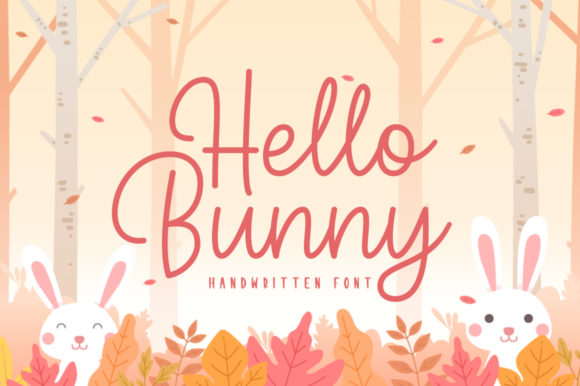
Hello Bunny: A Sweet Handwritten Font for Branding
I opened my design software on a rainy Tuesday morning, staring at a blank canvas for a new boutique skincare line. The client wanted something that felt organic and personal, yet undeniably modern. They needed a brand identity that whispered "care" rather than shouting "luxury." After scrolling through dozens of script fonts that felt either too rigid or overly decorative, I stumbled upon Hello Bunny. It was immediately clear that this wasn't just another generic typeface; it was a character waiting to be introduced.
Hello Bunny is a sweet handwritten font, masterfully designed to become a true favorite in any designer's library. As I began dragging the font file into my project folder, I could see why it stands out in the crowded world of Fonts. It maintains its classy calligraphic influences while feeling contemporary and fresh. That balance is rare. Too often, script fonts lean heavily into the vintage aesthetic, making them feel outdated for digital-first brands, or they are so geometric they lose the human touch entirely. Hello Bunny finds that perfect middle ground where elegance meets approachability.
First Impressions on the Mockup Board
The first thing I did was test the logo draft. I typed the brand name, a simple two-word phrase, and watched as the letters formed. The strokes of Hello Bunny have a natural rhythm, mimicking the flow of a pen held by a steady hand. There is a slight irregularity to the baseline and the varying thickness of the strokes that gives it life. It doesn't look like a machine generated it; it looks like someone cared enough to write it out by hand.
For a skincare brand, this texture is crucial. It suggests ingredients that are real and processes that are thoughtful. I placed the logo on a matte white packaging mockup, and the effect was instant. The font didn't overpower the product image; instead, it framed it with warmth. This is exactly what you want when using a display font for branding—it needs to set the mood without stealing the show. The visual hierarchy remained intact because Hello Bunny has excellent x-height and open counters, ensuring that even at smaller sizes, the characters remain distinct.
Testing Versatility Across Media
A great font must work everywhere, from a tiny Instagram story to a large storefront sign. I decided to push Hello Bunny beyond the logo to see how it handled different applications. First, I moved to social media graphics. I created a quote card for the brand's launch campaign, pairing the headline in Hello Bunny with a clean sans-serif body text. The contrast was striking. The handwritten style drew the eye immediately, creating an emotional connection, while the supporting text ensured readability.
Next, I looked at printed marketing materials. I designed a flyer for a pop-up shop event. Here, the calligraphic influences of the font really shone. The curves felt fluid and inviting, encouraging potential customers to imagine a relaxing experience inside the store. I also tested it on a business card mockup. Sometimes, script fonts can get lost on small print jobs, but Hello Bunny held its own. The lines were crisp, and the personality remained intact even when scaled down.
This versatility makes it a strong contender for packaging design as well. Imagine a jar of artisanal jam or a bottle of essential oils. A label featuring Hello Bunny instantly communicates "handmade" and "small-batch." It bridges the gap between a mass-produced item and a bespoke gift. In the realm of editorial design, I could see it working beautifully for chapter headings in a wellness magazine or as pull quotes in a lifestyle blog. It adds a layer of sophistication that standard serif or sans-serif fonts simply cannot achieve on their own.
Navigating Readability and Hierarchy
One of the biggest concerns with any handwritten font is legibility. Can it be read quickly? Does it confuse the audience? With Hello Bunny, the answer is generally yes, provided you use it correctly. It excels as a headline font, a logo font, or an accent font. However, like most scripts, it is not intended for long-form paragraphs. When I tried setting a full paragraph of copy in Hello Bunny, the reading speed slowed significantly, and the eye had to work harder to track the varying stroke widths.
This is a common pitfall in brand identity work. Designers often fall in love with a font's aesthetic and overuse it. My advice? Treat Hello Bunny as the star of the show, not the entire cast. Use it for short, impactful messages. Let it introduce your brand voice, then hand off the detailed information to a more neutral typeface. This approach ensures your brand perception remains professional while still retaining that unique, friendly charm.
Mastering Font Pairing
To truly make Hello Bunny sing, you need the right partner. During my testing phase, I experimented with several pairings. The most successful combination was with a modern, geometric sans-serif font. The clean lines of the sans-serif provided a solid foundation, allowing the playful curves of Hello Bunny to stand out without causing visual clutter. This pairing works exceptionally well for web design, where clarity is paramount.
I also tried pairing it with a classic serif font. This created a more traditional, editorial look, perfect for high-end boutiques or literary brands. The juxtaposition of the old-world serif structure with the fresh, contemporary feel of Hello Bunny created a dynamic tension that felt both timeless and current. Avoid pairing it with another script font unless you are aiming for a very specific, highly stylized effect. Two competing handwritten styles usually result in chaos rather than harmony.
Practical Considerations for Commercial Use
Before finalizing the design for the client, I always check the technical details of the commercial font. Hello Bunny comes with a robust set of features that make it practical for real-world projects. It includes multiple weights and styles, giving designers flexibility without needing to purchase additional files. The presence of alternates and ligatures is a huge plus. These small details allow you to customize the logo slightly for different contexts, adding a unique touch that sets the brand apart.
Another critical factor is multilingual support. If your client plans to expand globally, a font that only supports basic Latin characters will limit your options. Fortunately, Hello Bunny offers extensive language support, covering various European and international scripts. This ensures consistency across all design assets, whether you are designing a website header for a German audience or a product label for a French market.
Licensing is also straightforward. As a premium font, it offers clear commercial usage rights, which is essential for freelancers and agencies. You don't want to worry about legal issues down the road when a client scales their business. Knowing that the font is licensed for unlimited end-users and digital displays gives peace of mind during the handoff process.
Bringing the Brand to Life
When I presented the final concepts to the client, the reaction was immediate. They loved how Hello Bunny captured the essence of their brand—sweet, approachable, yet refined. The font didn't just look good on the screen; it translated perfectly to the physical samples we prepared. From the business cards to the website hero section, the typography tied everything together into a cohesive brand identity.
Using a font like Hello Bunny reminds us that typography is more than just arranging letters. It is about storytelling. Every curve and stroke contributes to the narrative of the brand. For designers looking to add a touch of warmth and personality to their next project, this creative font is a powerful tool. Whether you are working on a local restaurant menu, a creative studio portfolio, or a line of handmade goods, Hello Bunny offers the versatility and charm needed to make a lasting impression.
In the end, the success of the project wasn't just about the color palette or the layout; it was about finding the right voice. Hello Bunny provided that voice, turning a simple brand concept into a memorable experience. It proves that when you choose a typeface with intention, understanding its strengths and limitations, you can create designs that truly resonate with people.